
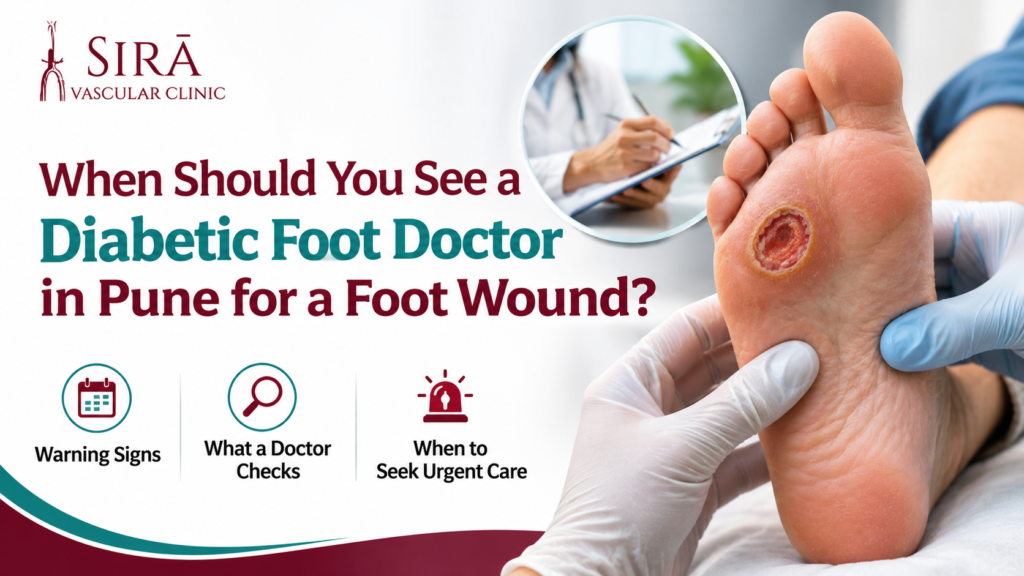
When Should You See a Diabetic Foot Doctor in Pune for a Foot Wound?
A small cut, blister or sore on the foot may not seem serious at first. However, for people living with diabetes, even a minor foot injury can require medical attention, particularly when sensation is reduced or blood circulation is poor.
Diabetes can affect the nerves and blood vessels that supply the feet. As a result, some people may not notice an injury immediately, while reduced blood flow can make wound healing more difficult. Recognising the warning signs and seeking medical advice at the right time can help identify complications early.
If you are looking for a diabetic foot doctor in Pune, it is important to understand which symptoms need assessment, what a doctor may check and when you should seek urgent medical care.
For more information about the clinic and its vascular care services, visit the SIRĀ Vascular Clinic homepage.
Why Should You Take a Diabetic Foot Wound Seriously?
High blood glucose over time can damage nerves, leading to a condition called diabetic neuropathy. When the nerves are affected, a person may have reduced sensation in the feet and may not feel pain from a cut, blister or pressure injury.
Diabetes can also contribute to peripheral artery disease, which reduces blood flow to the legs and feet. Poor circulation may delay wound healing and increase the risk of complications.
A wound that appears small may therefore need professional assessment, especially if it does not improve or shows signs of infection.
According to the National Institute of Diabetes and Digestive and Kidney Diseases, regular foot checks and appropriate diabetes management are important for reducing the risk of diabetes-related foot problems.
When Should You See a Diabetic Foot Doctor in Pune?
Certain changes in the feet should not be ignored. A healthcare professional can examine the wound, assess possible causes and determine the appropriate next steps.
1. A Wound That Is Not Healing
A cut, ulcer or blister that remains open, becomes larger or fails to improve needs medical evaluation.
Delayed healing may be associated with poor circulation, infection, repeated pressure on the affected area or other health conditions. A doctor can assess these factors and recommend appropriate wound care.
Avoid waiting for the wound to become painful. Reduced sensation can make a significant injury difficult to recognise.
2. Redness, Swelling or Discharge
Redness, warmth, swelling, pus or an unpleasant smell around a foot wound may indicate infection.
People with diabetes should seek prompt medical assessment when these symptoms develop. Fever, rapidly spreading redness or a sudden deterioration in the wound may require urgent emergency care.
Do not try to treat a potentially infected wound using home remedies or leftover medication.
3. Changes in Foot Colour or Temperature
A foot that becomes unusually pale, blue, dark or colder than the other foot may indicate a circulation problem, particularly when the change is sudden.
These symptoms need medical assessment. A suddenly cold, pale or painful foot can indicate an emergency and should be evaluated immediately.
4. Numbness or Loss of Sensation
Tingling, burning, numbness or reduced sensation may be signs of diabetic neuropathy.
When sensation is reduced, injuries can go unnoticed for longer. Regular foot examinations are particularly important for people who have experienced previous ulcers or other diabetes-related foot complications.
5. A Foot Ulcer or Open Sore
A foot ulcer is an open wound that may develop because of pressure, injury, nerve damage or circulation problems.
People with diabetes should seek medical advice promptly if an ulcer develops. The doctor may assess its depth, surrounding skin, signs of infection and blood supply to determine the appropriate care.
6. Leg Pain While Walking
Pain or cramping in the calf or leg that occurs during walking and improves with rest can sometimes be associated with peripheral artery disease.
Although several conditions can cause leg pain, recurring symptoms may warrant a vascular assessment, particularly when accompanied by foot wounds or changes in skin colour.
What Will a Doctor Check During a Diabetic Foot Assessment?
The assessment depends on the patient’s symptoms, medical history and the appearance of the wound.
Examination of the Wound
The doctor may check the wound’s size, depth, location, surrounding skin and signs of infection. The examination can also help identify pressure points or footwear-related injuries.
Assessment of Blood Circulation
The doctor may examine the pulses in the feet and look for changes in skin colour and temperature.
If reduced circulation is suspected, further tests may be recommended, such as an ankle-brachial index (ABI), Doppler ultrasound or other vascular imaging. The choice of test depends on the clinical findings.
Assessment of Nerve Function
The doctor may check whether sensation in the feet is reduced. This helps identify possible nerve damage and assess the risk of further unnoticed injuries.
Review of Medical History
The doctor may ask about diabetes management, current medicines, previous ulcers, smoking history, kidney disease and any earlier vascular procedures.
These details can help guide the assessment and treatment plan.
When Should You Consult a Vascular Surgeon?
Not every diabetic foot wound requires vascular surgery. However, a vascular assessment may be important when poor blood circulation is suspected or a wound is not healing as expected.
A vascular surgeon evaluates conditions affecting blood vessels and may recommend further investigations to understand whether reduced blood flow is contributing to the problem.
Depending on the findings, treatment may involve wound care, pressure reduction, management of infection, support with diabetes control or assessment for a procedure to improve circulation. The appropriate approach depends on the patient’s individual condition.
A multidisciplinary team may also be needed, particularly when a wound involves infection, nerve damage or several contributing factors.
What Should You Do While Waiting for Medical Assessment?
If you have diabetes and develop a foot wound, arrange medical assessment promptly rather than waiting to see whether it resolves on its own.
Until you receive medical advice:
- Keep pressure off the affected area as far as safely possible.
- Protect the wound from further injury.
- Avoid walking barefoot.
- Do not cut away dead skin, corns or calluses yourself.
- Do not apply harsh chemicals or unprescribed treatments to the wound.
- Follow your existing diabetes management plan.
- Seek urgent care if the wound worsens or signs of serious infection or sudden circulation problems appear.
If you suspect a serious infection or an emergency circulation problem, do not delay urgent treatment while waiting for a routine clinic appointment.
How Can You Reduce the Risk of Future Foot Wounds?
Daily foot care is important for people with diabetes, especially those who have reduced sensation or a history of foot ulcers.
Consider the following precautions:
- Examine both feet every day, including the soles and areas between the toes.
- Check for cuts, blisters, redness, swelling and changes in skin colour.
- Wear comfortable, well-fitting footwear that reduces friction and pressure.
- Avoid walking barefoot.
- Attend regular foot examinations as advised by your healthcare professional.
- Follow your prescribed diabetes treatment and blood glucose monitoring plan.
- Seek medical advice promptly if a new wound or unusual change develops.
If you have difficulty seeing the soles of your feet, use a mirror or ask someone to help you check them.
These steps can help identify problems earlier but cannot eliminate every risk.
Frequently Asked Questions
Can a diabetic foot wound be painless?
Yes. Diabetes-related nerve damage can reduce sensation, so a wound may develop without causing much pain. Check your feet regularly and seek medical advice if you notice an injury.
How long should I wait before consulting a doctor about a foot wound?
People with diabetes should seek prompt medical advice for a new foot wound rather than waiting for it to heal on its own. A wound with infection symptoms, rapid deterioration or signs of reduced circulation requires urgent assessment.
Does every diabetic foot ulcer need surgery?
No. Treatment depends on the wound, infection status, blood supply and other clinical factors. Some wounds can be managed without surgery, while others may require specialist procedures.
Which doctor should I consult for a non-healing diabetic foot wound?
The appropriate specialist depends on the problem. A primary care doctor, diabetologist, wound-care professional or vascular surgeon may be involved. A vascular assessment may be particularly relevant when poor circulation is suspected.
When is a diabetic foot wound an emergency?
A rapidly worsening wound, black tissue, severe infection symptoms or a suddenly cold, pale or painful foot may indicate a medical emergency. Seek emergency care immediately.
Conclusion
A foot wound in a person with diabetes should not be ignored, even when it is small or painless. Delayed healing, swelling, discharge, changes in foot colour and reduced sensation are reasons to seek medical advice.
A diabetic foot doctor can assess the wound and identify whether infection, nerve damage, pressure or poor circulation may be contributing to the problem. When reduced blood flow is suspected, a vascular assessment may help guide further care.
If you are concerned about a foot wound in Pune, seek appropriate medical evaluation promptly. You can also visit the SIRĀ Vascular Clinic homepage to learn more about the clinic and its vascular care services.
Medical disclaimer: This article is intended for general educational purposes and does not replace professional medical advice, diagnosis or treatment.