
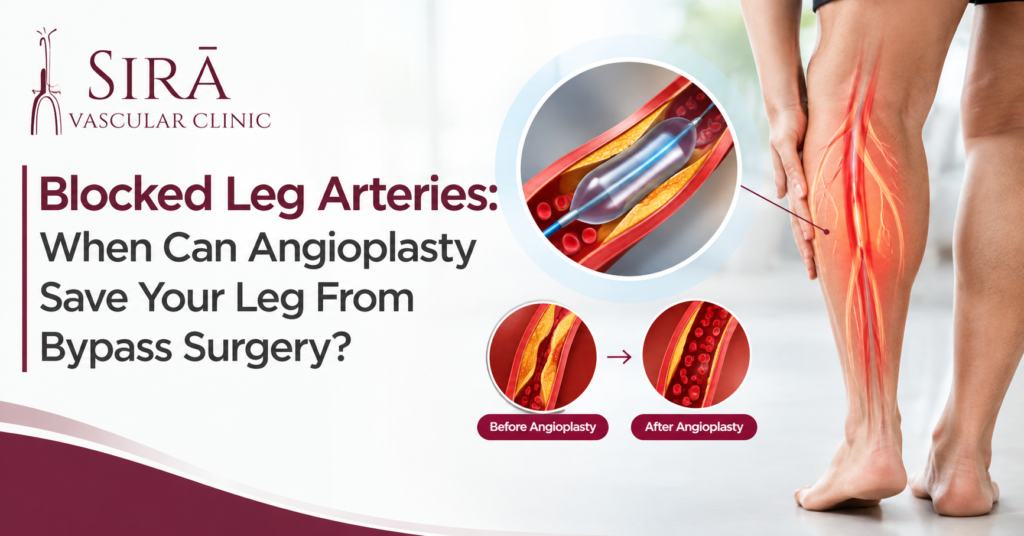
Blocked leg arteries can reduce the supply of oxygen-rich blood to the muscles, skin, and tissues of the lower limb. This condition is often linked to plaque buildup inside the arteries. Some people notice pain while walking, while others develop cold feet, skin changes, non-healing wounds, or pain even at rest.
Patients looking for Endovascular Surgeon Services in Pune often want to know whether angioplasty can reopen a blocked artery and help them avoid bypass surgery. In selected cases, angioplasty can restore blood flow through a minimally invasive procedure. However, it is not suitable for every blockage. The best treatment depends on the location of the blockage, its length, the condition of the arteries, and the overall health of the patient.
What Causes Blocked Leg Arteries?
The most common cause is plaque buildup, also known as atherosclerosis. Plaque contains cholesterol, fat, calcium, and other substances that gradually narrow the artery. As the opening becomes smaller, less blood reaches the leg.
Several factors can increase the risk of blocked leg arteries:
- Diabetes.
- Smoking or tobacco use.
- High blood pressure.
- High cholesterol.
- Obesity.
- Kidney disease.
- Increasing age.
- A family history of vascular disease.
- Previous heart attack or stroke.
Diabetes deserves special attention because it can damage blood vessels and nerves. Reduced sensation may cause a person to overlook a small wound, while poor blood flow can delay healing and increase the risk of infection.
Common Symptoms of Poor Blood Flow
Symptoms may develop slowly and should not be ignored. They can include:
- Pain, heaviness, or cramping in the calf, thigh, or buttock while walking.
- Pain that improves after resting.
- Coldness in one foot or leg.
- Numbness or weakness.
- Pale, bluish, or unusually dark skin.
- Shiny skin or loss of leg hair.
- Slow-growing toenails.
- Non-healing wounds on the foot or ankle.
- Pain in the foot while resting or sleeping.
Pain while walking is sometimes called intermittent claudication. It happens because the muscles need more blood during activity than the narrowed arteries can provide.
When Is Angioplasty Considered?
Angioplasty is a minimally invasive procedure used to widen a narrowed or blocked artery. A thin tube called a catheter is guided through a blood vessel to the affected area. A small balloon is then inflated to widen the artery and improve blood flow.
In some cases, a stent is placed inside the artery. A stent is a small mesh tube that helps keep the vessel open.
Angioplasty may be considered when:
- Leg pain limits normal walking or daily activities.
- Symptoms continue despite medicines and lifestyle changes.
- A wound is not healing because of poor blood supply.
- There is reduced blood flow to the foot.
- The blockage is suitable for catheter-based treatment.
- The patient has medical conditions that make open surgery more difficult.
- Blood flow needs to be restored quickly to protect the limb.
Angioplasty may be especially useful for blockages in certain areas, such as the iliac, femoral, popliteal, or lower-leg arteries. The suitability of the procedure must be confirmed through vascular imaging.
Can Angioplasty Prevent Bypass Surgery?
In selected patients, angioplasty may successfully restore blood flow without the need for open bypass surgery. This is one of its major benefits. However, angioplasty cannot guarantee that bypass surgery will never be required.
The result depends on several important factors.
Location and Length of the Blockage
Short, localised blockages may be easier to treat with angioplasty. Long or heavily calcified blockages may be more challenging. Some blockages extend through several parts of the artery and may require a different approach.
Condition of the Artery Below the Blockage
Blood must be able to flow into the smaller arteries below the treated area. If the vessels below the blockage are severely damaged, simply opening one area may not provide enough circulation for healing.
Amount of Calcium in the Artery
Heavily calcified arteries can be hard and less flexible. The balloon may not expand the artery properly, and a stent may not remain fully open. Special techniques may sometimes be needed to modify the plaque before angioplasty.
Presence of Wounds or Gangrene
Patients with non-healing wounds, infection, or gangrene may need urgent restoration of blood flow. Angioplasty may help in suitable cases, but some patients require bypass surgery or a combination of procedures to provide enough blood supply.
Overall Health
Diabetes, kidney disease, heart disease, smoking, and poor nutrition can affect healing and long-term results. The treatment plan must consider both the artery and the patient’s general health.
When May Bypass Surgery Be Necessary?
Bypass surgery creates a new route for blood to travel around a blocked artery. A healthy vein or an artificial graft may be used to connect the artery above and below the blockage.
Bypass may be recommended when:
- The blockage is long or complex.
- Angioplasty is not technically possible.
- The artery is severely calcified.
- Previous angioplasty has failed.
- Blood flow remains inadequate after angioplasty.
- There are extensive wounds or tissue damage.
- The patient has severe pain at rest.
- There is a serious risk of limb loss.
- A durable long-term blood flow route is needed.
Bypass surgery is more invasive than angioplasty and usually involves a longer recovery. However, it may provide better blood flow in certain complex cases. The aim is not simply to avoid surgery. The aim is to restore circulation effectively and protect the leg.
Tests Used Before Choosing Treatment
A vascular specialist usually performs a detailed assessment before recommending angioplasty or bypass surgery.
Common tests may include:
- Ankle-Brachial Index: Compares blood pressure at the ankle with blood pressure in the arm to identify reduced circulation.
- Doppler Ultrasound: Shows blood flow and helps locate narrowed or blocked arteries.
- CT Angiography: Provides detailed images of the blood vessels and the exact location of blockages.
- MR Angiography: May be used when detailed vascular imaging is needed.
- Catheter Angiography: Uses contrast dye and X-ray imaging to examine the arteries during planning or treatment.
- Blood Tests: May check blood sugar, cholesterol, kidney function, and other factors that affect treatment.
The doctor may also examine the skin, foot temperature, pulses, wounds, and sensation in the leg.
What Happens After Angioplasty?
After angioplasty, patients are usually advised to increase activity gradually. The catheter entry site must be kept clean and monitored for bleeding, swelling, or redness.
Treatment may include medicines to reduce the risk of blood clots, cholesterol-lowering treatment, blood pressure control, and diabetes management.
Long-term care is essential because angioplasty treats the blockage but does not remove every cause of artery disease. To reduce the chance of another blockage, patients should:
- Stop smoking and tobacco use.
- Take prescribed medicines regularly.
- Control blood sugar and blood pressure.
- Follow a heart-healthy eating plan.
- Walk or exercise as advised.
- Maintain a healthy weight.
- Attend follow-up appointments.
- Check the feet daily, especially when diabetes is present.
When Should You Seek Emergency Care?
Sudden severe leg pain, a cold or pale foot, new numbness, weakness, or inability to move the toes may indicate an acute loss of blood supply. This can be a medical emergency.
Immediate medical attention is also needed for:
- A rapidly worsening foot wound.
- Black or blue skin.
- Severe pain at rest.
- Fever with a foot wound.
- Foul-smelling discharge.
- Sudden loss of sensation.
- A leg that becomes noticeably colder than the other.
Early treatment can sometimes prevent permanent tissue damage and reduce the risk of amputation.
Conclusion
Angioplasty can help selected patients with blocked leg arteries avoid bypass surgery by reopening the artery through a minimally invasive procedure. It may improve walking ability, reduce pain, support wound healing, and help protect the limb. However, bypass surgery may still be necessary when blockages are long, complex, heavily calcified, or associated with severe tissue damage.
Dr. Pranjal Melge Sawant provides personalised evaluation and treatment planning for patients with peripheral artery disease, poor circulation, diabetic foot problems, and complex vascular conditions. If you are searching for a Best Vascular Specialist in Pune, timely assessment can help determine whether angioplasty, bypass surgery, or another treatment is appropriate for your condition.
#BlockedLegArteries #Angioplasty #PeripheralArteryDisease #VascularHealth #EndovascularTreatment #DiabeticFootCare #VascularSurgery #DrPranjalMelgeSawant