Blood clots might sound like a small medical issue, but they can turn into serious, life-threatening conditions if ignored. One of the most common types of clotting problems is Deep Vein Thrombosis (DVT)—a condition where a blood clot forms in the deep veins, usually in the legs. The tricky part? Many people don’t even realize they have it until complications arise.
Understanding DVT—its symptoms, risks, and prevention—is the first step toward protecting your health. With expert care from specialists like Dr. Pranjal Melge Sawant, known as one of the Best Vascular Specialists in Pune, patients can receive timely diagnosis and advanced treatment for vascular conditions.
What is DVT (Deep Vein Thrombosis)?
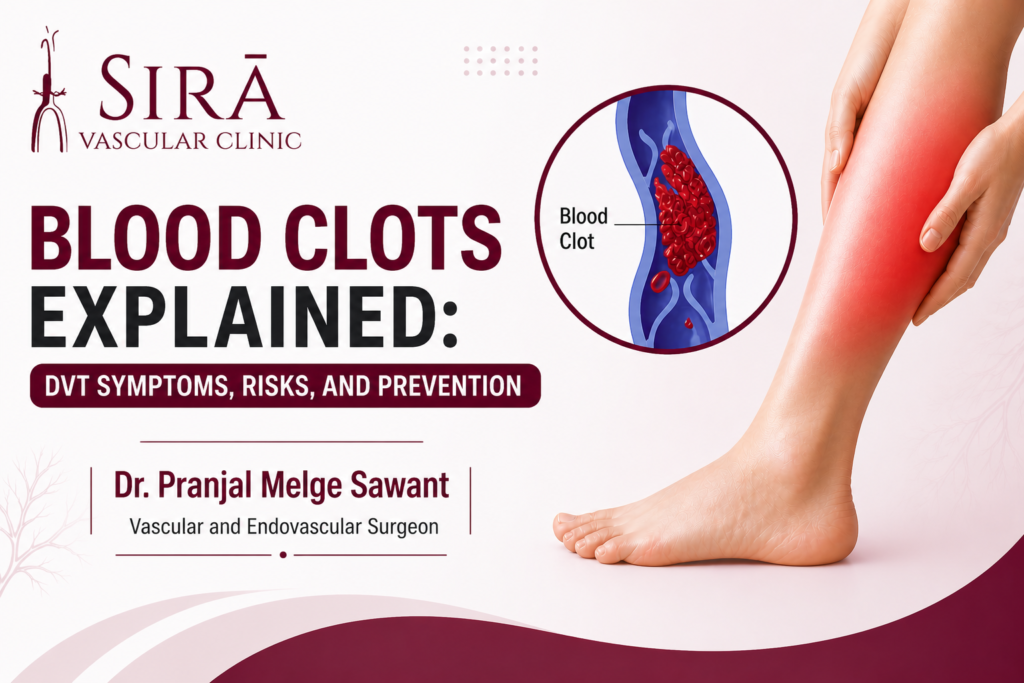
DVT occurs when a blood clot forms in a deep vein, most commonly in the legs. Normally, blood flows smoothly through your veins, but certain conditions can cause it to thicken and clot.
Think of your veins like highways. When traffic flows smoothly, everything works fine. But when there’s a blockage (a clot), it can disrupt the entire system. In severe cases, part of the clot can travel to the lungs, causing a pulmonary embolism, which is a medical emergency.
Common Symptoms of DVT
DVT can sometimes develop silently, but in many cases, your body gives warning signs. Recognizing these early can make a huge difference.
Key symptoms include:
- Swelling in one leg (rarely both)
- Pain or tenderness, especially in the calf
- Warmth in the affected area
- Red or discolored skin
- A feeling of heaviness in the leg
These symptoms may seem mild at first, but they should never be ignored.
Who is at Risk of Blood Clots?
Certain factors increase the likelihood of developing DVT. Knowing your risk can help you stay alert and take preventive steps.
Major risk factors:
- Long periods of sitting (travel, desk jobs)
- Surgery or prolonged bed rest
- Pregnancy or postpartum period
- Obesity
- Smoking
- Family history of clotting disorders
- Certain medical conditions like cancer or heart disease
Even something as simple as sitting for long hours without movement can increase your risk.
Why DVT is Dangerous
DVT itself is serious, but the real danger lies in complications. If a clot breaks free and travels to the lungs, it can cause a pulmonary embolism, which can be fatal if not treated immediately.
This is why early diagnosis and treatment are crucial. Ignoring symptoms can lead to long-term damage or life-threatening situations.
How is DVT Diagnosed?
If DVT is suspected, doctors use specialized tests to confirm the diagnosis:
- Ultrasound: The most common and non-invasive test
- D-dimer Test: A blood test to detect clotting activity
- CT or MRI Scans: In complex cases
Early detection helps prevent complications and ensures better outcomes.
Treatment Options for DVT
Treatment focuses on stopping the clot from growing and preventing new clots from forming.
1. Blood Thinners (Anticoagulants)
These medications reduce the blood’s ability to clot and are the most common treatment.
2. Thrombolysis
In severe cases, clot-busting drugs are used to dissolve the clot.
3. Compression Stockings
These help reduce swelling and improve blood flow in the legs.
4. Advanced Endovascular Procedures
Specialists like Dr. Pranjal Melge Sawant perform minimally invasive procedures to remove or manage clots effectively.
With advanced vascular care, treatment today is safer, faster, and more effective than ever before.
How to Prevent Blood Clots
Prevention is always better than treatment—especially when it comes to DVT.
Simple prevention tips:
- Stay active and avoid long periods of sitting
- Take breaks during long travel
- Maintain a healthy weight
- Stay hydrated
- Avoid smoking
- Follow doctor’s advice after surgery
Even small lifestyle changes can significantly reduce your risk.
Expert Vascular Care in Pune
When it comes to vascular health, choosing the right specialist is critical. Dr. Pranjal Melge Sawant, a highly qualified Vascular and Endovascular Surgeon, brings extensive expertise in treating complex vascular conditions.
With qualifications including MBBS, DNB General Surgery, and DrNB Vascular Surgery, she is known for her precision, advanced techniques, and patient-focused approach. As a leading Best Vascular Specialist in Pune, Dr. Sawant offers comprehensive care—from diagnosis to minimally invasive treatment—ensuring the best possible outcomes for her patients.
When Should You See a Doctor?
You should consult a doctor immediately if:
- You notice swelling or pain in your leg
- Symptoms worsen suddenly
- You experience chest pain or shortness of breath
Early medical attention can save lives.
Conclusion
Blood clots may seem invisible, but their impact can be severe if left untreated. Understanding DVT symptoms, risks, and prevention empowers you to take control of your health.
With timely diagnosis, proper care, and expert guidance from specialists like Dr. Pranjal Melge Sawant, you can prevent complications and ensure better vascular health. Don’t ignore the signs—your body is always trying to tell you something.